Pumps, filters, heaters, salt cells, lights, and plumbing leaks — diagnosed on site and fixed the same visit whenever parts allow. Honest pricing, no upsell, and parts chosen to hold up in Tucson's hard water.
Tucson's tap water comes out of the tap at roughly 220 parts per million calcium hardness. That is above what every major equipment manufacturer recommends, and it means calcium is depositing on every surface the water touches — heater cores, salt cell plates, filter grids, and tile — from the day the pool is filled. Add 300-plus days of direct UV that degrades rubber seals, O-rings, and PVC fittings, and equipment in this climate simply takes more punishment than the same hardware in a milder market.
The practical result is that a pool pump motor rated for eight years may last five here, a salt cell rated for five years may last three, and a heater with scale on its heat exchanger burns more gas every month until the exchanger cracks. Catching these problems early — a pump that hums louder than it used to, a heater that takes longer to warm the water, a salt cell that reads low output — is the difference between a repair bill and a replacement bill.
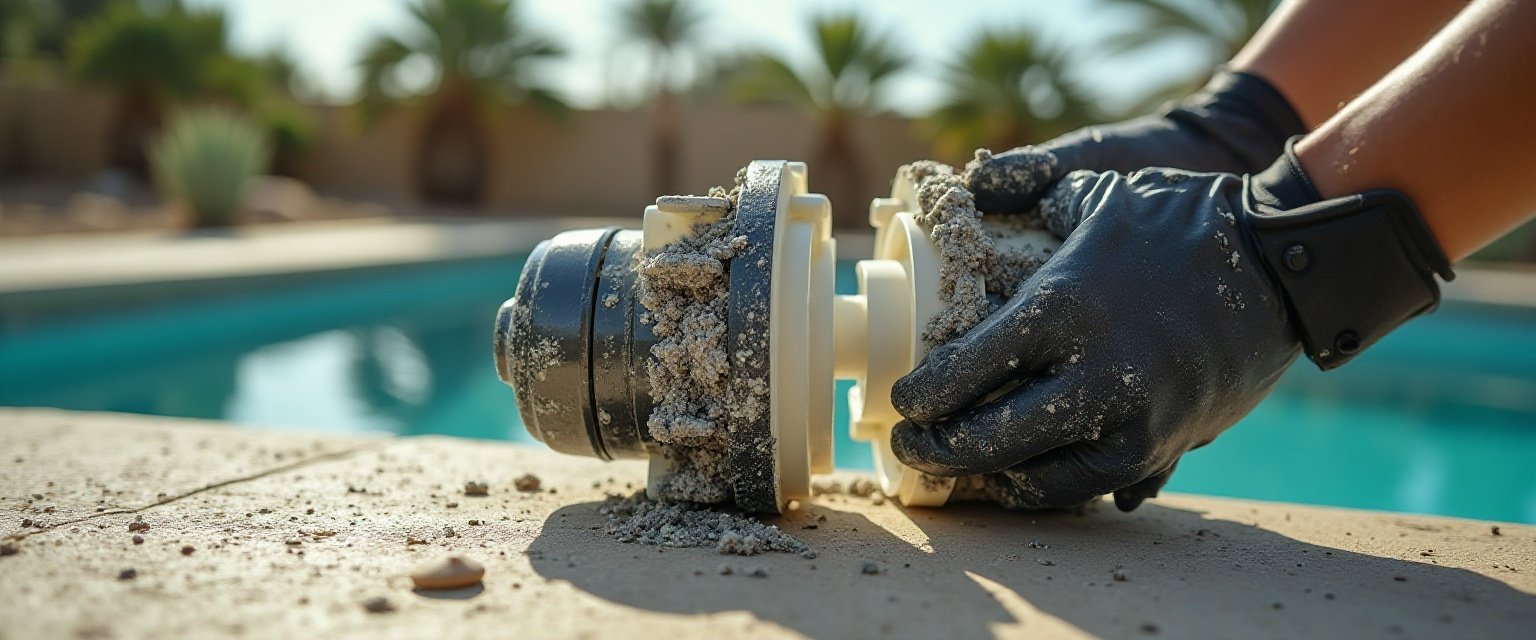
Calcium scale inside a pump housing — common in Tucson's 220 ppm water. Catching it early saves the motor.
What Gets Repaired
Pumps and Motors
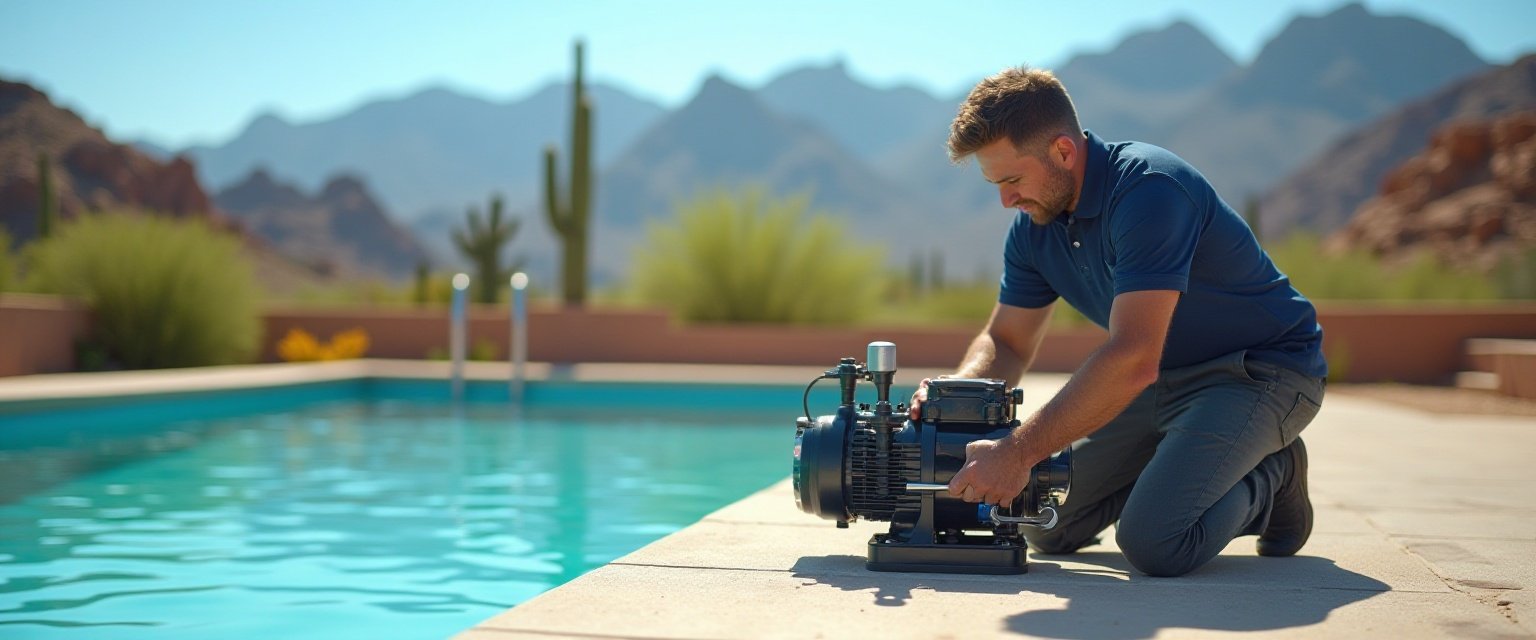
A noisy pump usually means worn bearings, and replacing the motor is faster and cheaper than replacing the whole pump body. If the pump is old enough that the motor costs more than half a new variable-speed unit, a good pool service will tell you — a variable-speed pump cuts energy costs by 60 to 80 percent, and in Tucson's nine-month pool season that adds up fast. Pentair, Hayward and Jandy motors are common, and a motor swap can often be finished in a single visit.
Filters
Cartridge filters clog with calcium and body oils; DE filters develop torn grids; sand filters channel after four or five years and stop catching fine particles. A good pool service cleans, rebuilds, or replaces based on what makes sense for the filter's age. If your pressure gauge reads eight to ten PSI above its clean baseline, the filter is telling you something — call before it puts back-pressure on the pump.
Heaters
Gas heaters in Tucson fail most often at the heat exchanger, where calcium scale insulates the metal from the water and forces the burner to run hotter than it should. Igniter modules, pressure switches, and thermistors are common repair items that cost far less than a new heater. A cracked exchanger, though, usually means the heater is done — at that point the repair cost approaches the price of a replacement. A good pool service diagnoses before a good pool service quotes, and a good pool service does not push a replacement when a $200 part solves the problem.
Salt Chlorine Generators
A salt cell coated with calcium scale produces less chlorine, and the control board compensates by running the cell harder, which shortens its life even more. A good pool service acid-washes cells on site and test output against the manufacturer's baseline. If the cell is past the point where cleaning restores full output, a good pool service replaces it — and a good pool service will talk to you about adjusting your water chemistry to extend the new cell's life, because the same hard water that killed the old one will kill the new one if nothing changes.
Lights
Burned-out pool lights are straightforward — pull the fixture, replace the bulb or LED assembly, reseal the lens gasket, and test. If the fixture housing has corroded (common on older pools where the bonding wire has deteriorated), a good pool service replaces the housing and checks the bonding connection while the niche is open. All pool light work is done with the breaker locked off.
Plumbing Leaks
If your pool loses more water than the bucket test accounts for, there is a leak somewhere — in a return line, a skimmer throat, or a main drain run. A good pool service pressure-tests individual lines to isolate the leak, then expose and repair the section. Underground plumbing repairs are disruptive, and a good pool service should be straight with you about what the job involves before a good pool service starts digging.
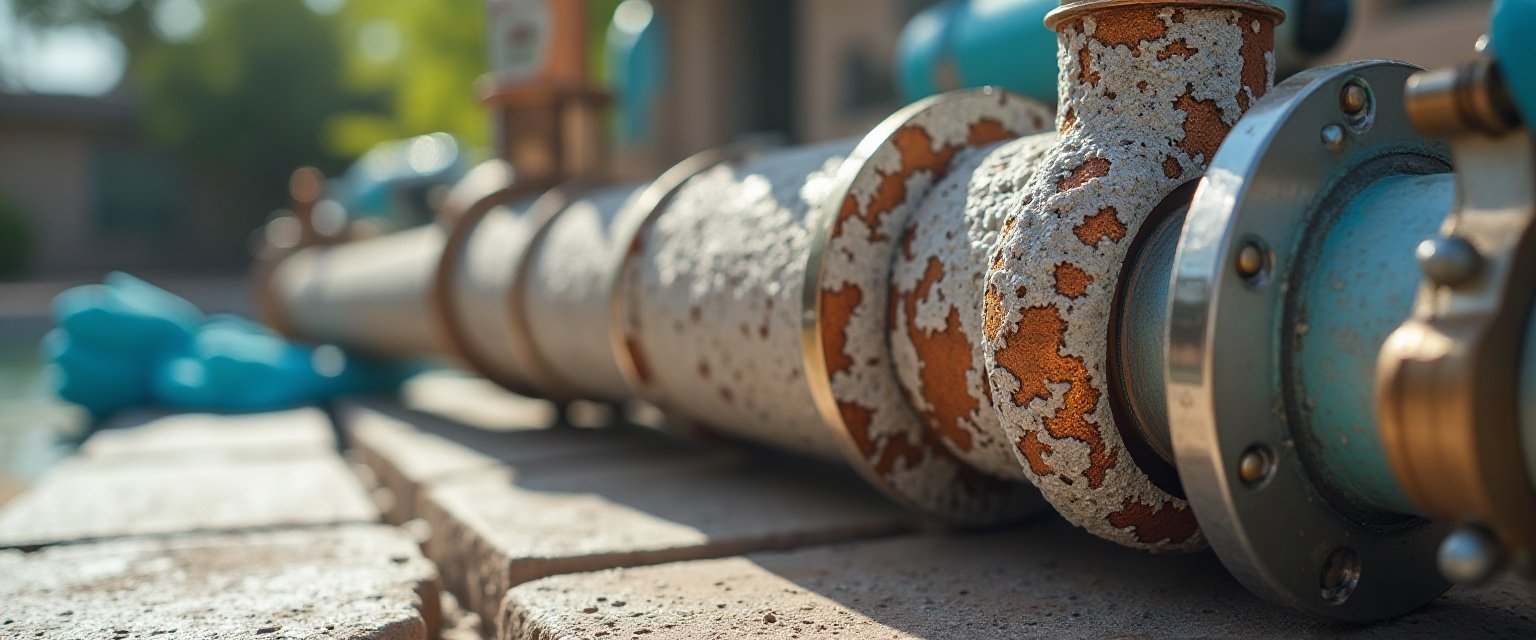
Scale buildup on a heat exchanger — the most common heater failure in hard-water markets like Tucson.
How a Repair Visit Works
You call, describe the symptom, and a good pool service schedules the visit — usually within a day or two, same day when possible. The technician diagnoses on site, shows you what he found, and gives you a price before any work starts. If the repair can be done that visit, it gets done. If a part needs to be ordered, a good pool service tells you the lead time and comes back to install it. Ask to see the cost of the part and the cost of the labor as separate numbers.
Tucson, Oro Valley, Marana, Sahuarita, and Vail
Calls are taken from across the Tucson metro — from Marana and Oro Valley in the north through the Catalina Foothills, central Tucson, Sahuarita, and Vail to the southeast. If you are inside Pima County and you have a pool, a good pool service can get to you.
Pool Repair Questions
How much does a pool pump replacement cost in Tucson?
A single-speed pump replacement typically runs $450 to $800 installed. A variable-speed pump costs $1,200 to $1,800 but cuts energy bills by 60 to 80 percent — it usually pays for itself within two cooling seasons in Tucson's long pool year.
Why does my pool equipment fail faster in Tucson?
Tucson tap water runs around 220 parts per million calcium hardness — well above the 200 ppm ceiling pool manufacturers recommend. That calcium plates onto heater cores, salt cells, and filter grids, shortening their life. UV exposure also degrades O-rings, gaskets, and PVC fittings faster than in milder climates.
Can you repair a pool heater, or does it need to be replaced?
It depends on the failure. Igniter modules, pressure switches, and thermistors are common heater repairs that cost far less than a new unit. A cracked heat exchanger — usually caused by years of scale buildup — generally means replacement because the repair cost approaches the price of a new heater.
How do I know if my pool is leaking or just evaporating?
Set a bucket of water on a pool step and mark both the pool level and the bucket level. Wait 24 hours. If the pool dropped more than the bucket, you have a leak — evaporation affects both equally. Tucson pools can lose a quarter inch per day to evaporation in summer, so a small drop is normal.
Do I need a permit for pool equipment repair in Tucson?
Replacing a pump, filter, heater, or salt cell with a like-for-like unit generally does not require a permit in the City of Tucson. Work that changes plumbing layout, electrical circuits, or barrier fencing usually does. If you are upgrading from gas to electric heat or adding new equipment, check with Tucson Development Services first.
Pool Not Running Right?
Call and describe the symptom. A good pool service will diagnose on site, show you what it found, and give you a price before any work starts.