That white crust on your waterline tile is calcium scale — and in Tucson's 220 ppm water, every pool gets it. A good pool service removes it by media blasting, not scrubbing. No drain, no damage to the tile glaze, and the pool is swimmable the same day.
Tucson Water delivers water at roughly 220 parts per million calcium hardness. Pool manufacturers recommend keeping calcium below 200. That gap is small on paper, but it compounds every day the pump runs, the heater fires, and the Arizona sun evaporates water off the surface. Evaporation leaves the calcium behind — concentrated in the water that remains — and the mineral deposits wherever it meets air, which is the waterline tile.
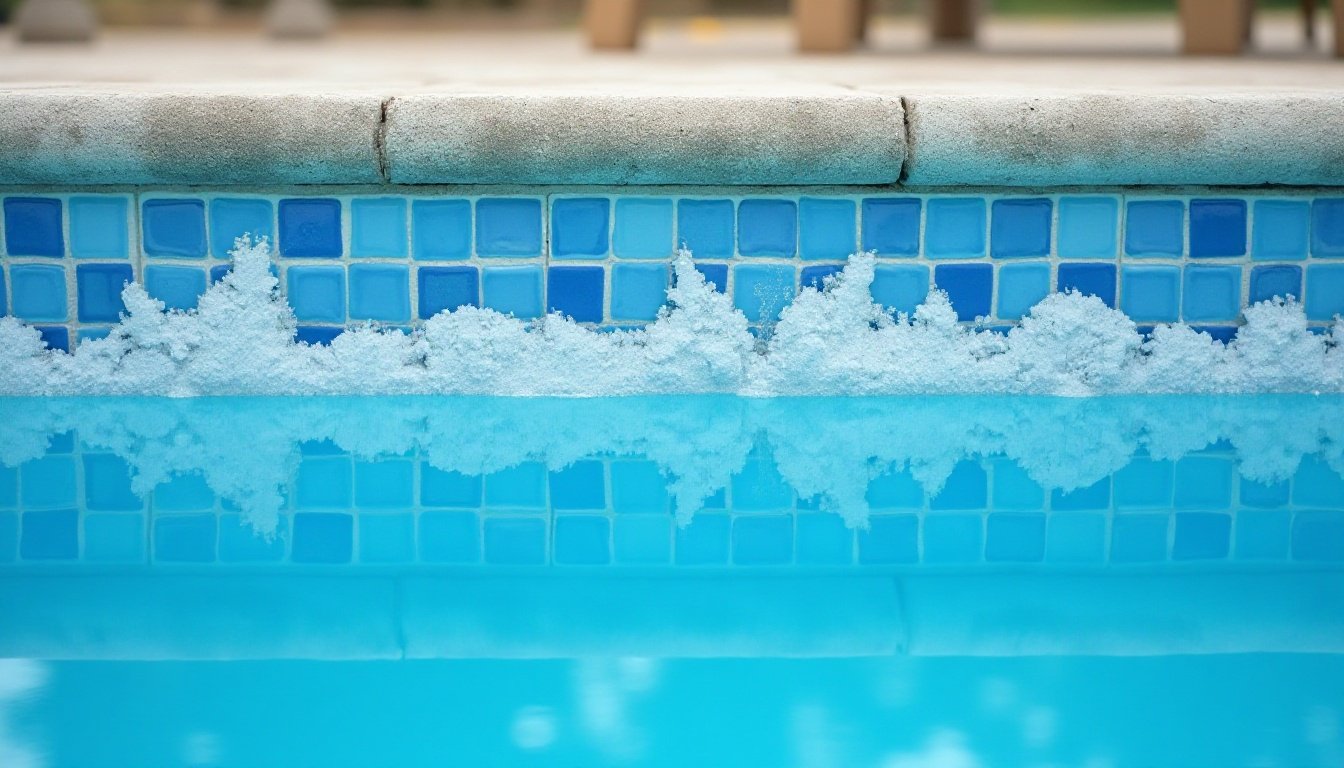
The result is a white or gray crust that starts as a faint ring and, left alone for two or three years, builds into a thick layer that no amount of scrubbing will remove. Underneath that crust the tile is fine. The job is getting the scale off without taking the tile's glaze with it.
Two years of calcium buildup at the waterline — typical of a Tucson pool that has not had tile cleaning.
How It Is Cleaned
A good pool service uses a low-pressure media blaster loaded with a calcium-ite or kieserite blasting media. Unlike glass bead — which is abrasive enough to strip the glaze off ceramic and porcelain tile — these media dissolve on impact. They break the calcium bond without scratching the tile surface or gouging the grout. The tile comes back looking the way it did when the pool was built, with the glaze intact so scale is slower to return.
The process takes two to four hours for an average residential pool. A good pool service lowers the water six to eight inches below the tile line, blasts one section at a time, and vacuums the debris as it goes. The pool is refilled and swimmable the same day. There is no need for a full drain unless you are also doing an acid wash or replastering.
The partial drain-and-refill
After the tile is clean, the water that caused the buildup is still in the pool — still at 220 ppm or higher. Many homeowners pair tile cleaning with a partial drain-and-refill: pump out a third to half the pool volume and replace it with fresh water. That dilutes the calcium, which slows the next round of scaling and extends the time before the tile needs cleaning again. In Pima County, salt water pools must drain to the sanitary sewer, not the street or a wash. Non-salt pools can drain to landscape or the sewer, depending on the volume.
Why Media Matters
There are three ways to remove waterline calcium, and they are not equal.
Pumice stones and acid work on light calcium carbonate — the white, flaky kind that has been forming for less than a year. They are slow, they risk etching grout if the acid sits too long, and they do nothing to calcium silicate, the harder gray deposit that builds up over years.
Glass bead blasting removes everything, including the tile's glaze. A glazed tile is smooth, and smooth surfaces resist scale. A tile stripped of its glaze is rough, and rough surfaces attract scale faster. A pool blasted with glass bead looks perfect for six months and then scales up worse than before.
The media a good pool service uses — kieserite or calcium-ite — dissolves on contact with the scale. It removes the deposit without touching the glaze. The tile stays smooth, the grout stays intact, and the scale takes longer to return.
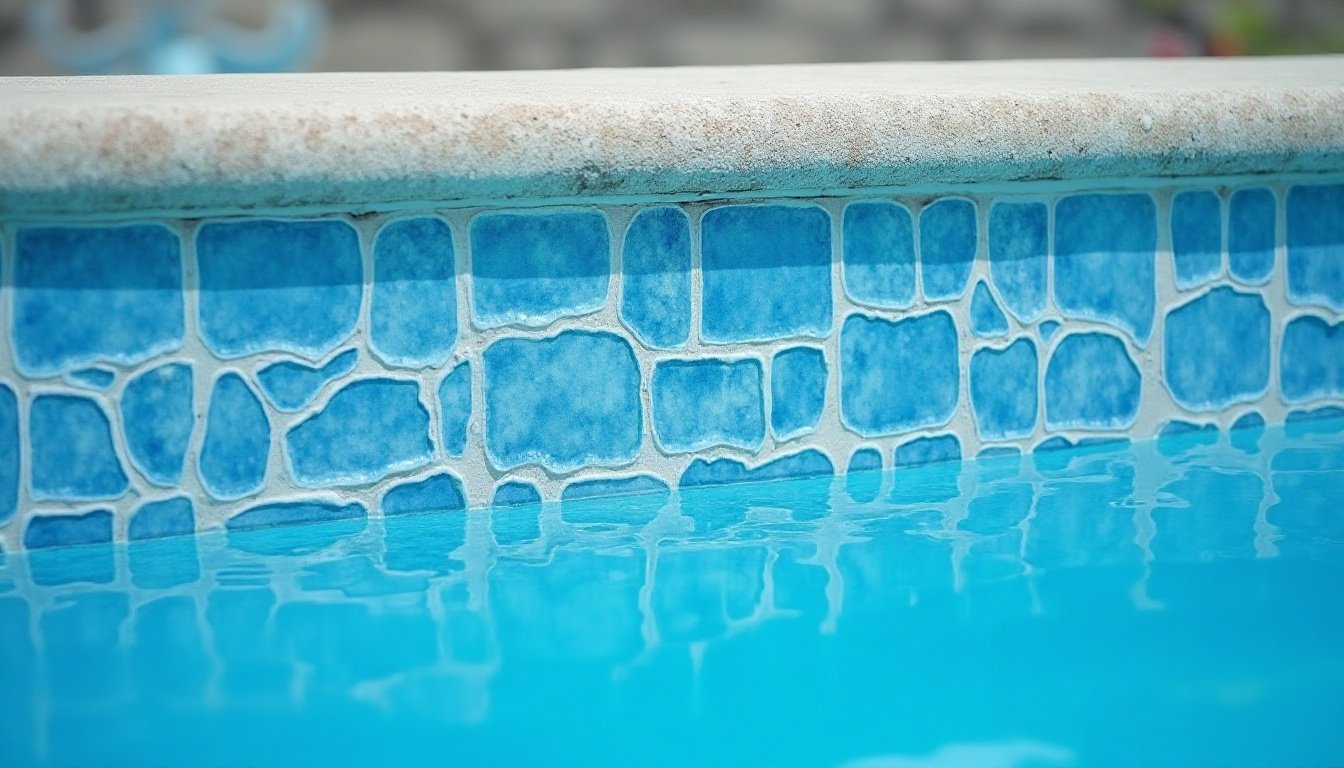
The same tile after media blasting — glaze intact, no scratching, and the scale is gone.
When to Schedule
Most Tucson pools need tile cleaning every two to three years. You will know it is time when the white line at the waterline is visible from across the yard, or when you can feel the crust with your fingers. Waiting longer than three years does not damage the tile, but the job takes longer and costs more because there is more material to remove.
The best time to schedule is spring — before pool season is in full swing and before monsoon season drops dust and debris that stick to fresh scale. Fall works too, especially if you are closing the pool for a few cooler months and want it clean when you reopen.
Tucson, Oro Valley, Marana, and Sahuarita
A good pool service cleans tile across the Tucson metro — Oro Valley, Marana, Catalina Foothills, central Tucson, Sahuarita, and Vail. Calls are taken from anywhere in Pima County. Call with the approximate length of your pool's tile line and a good pool service will give you a price over the phone.
Tile Cleaning Questions
How often should pool tile be cleaned in Tucson?
Every two to three years for most Tucson pools. Water above 200 ppm calcium hardness — and Tucson's is around 220 — builds a visible scale line faster than pools in softer-water cities. If you see a white or gray crust forming at the waterline, it is time regardless of the calendar.
Does tile cleaning require draining the pool?
Not for the blasting itself. A good pool service lowers the water six to eight inches below the tile line, blasts, then refills. A partial drain-and-refill afterward is sometimes recommended to bring calcium hardness down, which slows the next round of buildup. Full draining is only needed if the pool also needs an acid wash or replastering.
What is the difference between glass bead blasting and media blasting?
Glass bead is abrasive enough to strip the glaze off ceramic and porcelain tile, leaving a rough surface that attracts scale faster. A good pool service uses a calcium-ite or kieserite media that dissolves on impact — it removes the scale without scratching the tile or damaging grout. The tile comes out looking like it did when the pool was built.
Can I remove calcium scale myself with muriatic acid?
You can remove light calcium carbonate scale that way, but it takes hours of careful work and the acid can etch grout if left on too long. Calcium silicate — the harder, grayer deposit that builds up over years — does not respond well to acid at all. For anything beyond a light film, professional blasting is faster, safer for the tile, and more thorough.
Where does the blasting media go after the job?
The media a good pool service uses dissolves on contact with the tile, so very little solid debris enters the pool. What does settle is vacuumed out and the filter is cleaned after the job. The pool is swimmable the same day.
Calcium Scale on Your Tile?
Call with the approximate length of your tile line and a good pool service will give you a price over the phone. No drain, no glaze damage, swimmable the same day.