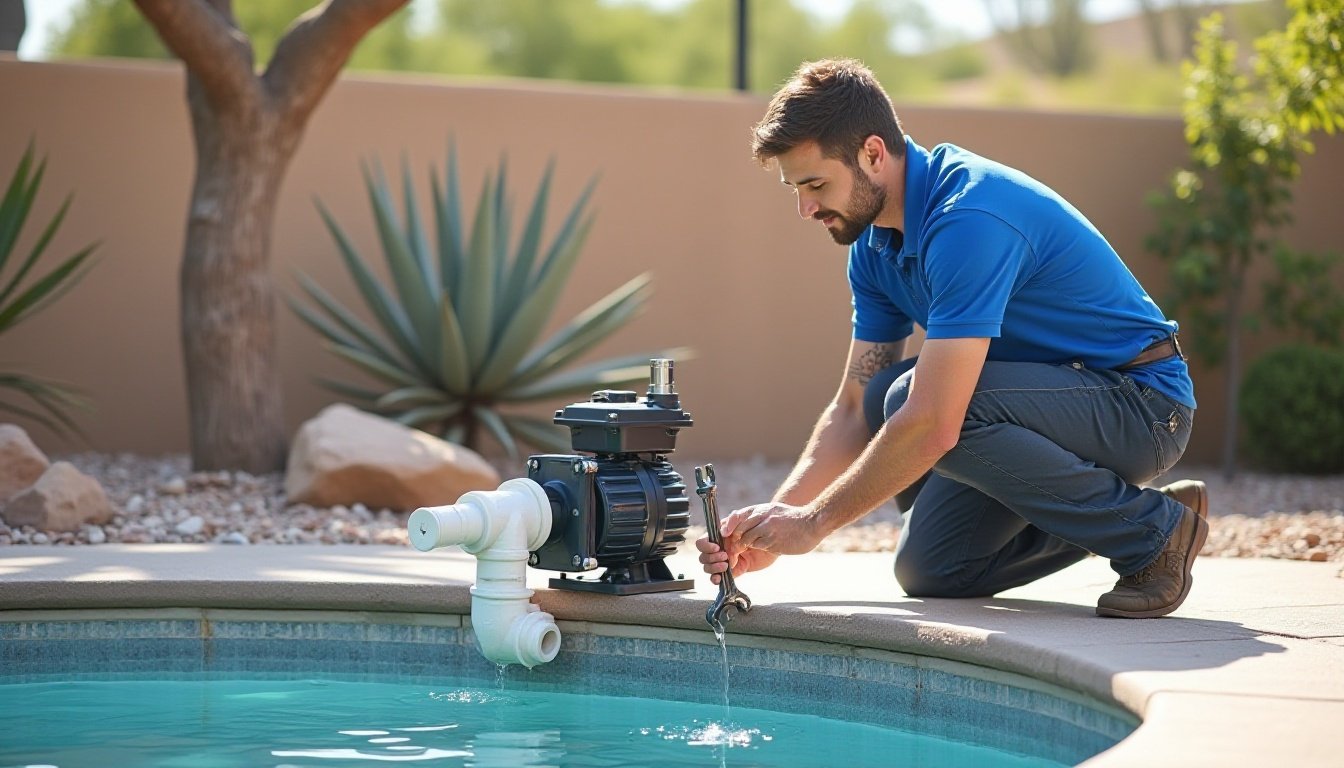
Noisy bearings, leaking seals, tripped breakers, or a motor that will not start — a good pool service diagnoses on site and fixes the same visit when parts allow. Motor swaps, impeller replacements, and variable-speed upgrades.
Pool pumps do not fail without warning. They tell you first, and the earlier you listen, the cheaper the fix.
A pump that hums but will not spin usually has a seized bearing or a dead start capacitor — both are motor repairs, not pump replacements. A screeching or grinding noise while the pump is running means the bearings are wearing out and the motor is on borrowed time. A pump that trips the breaker has an electrical fault — a shorted winding, a bad capacitor, or water in the motor housing from a failed shaft seal. A pump that runs but moves little water may have a clogged impeller, a cracked fitting on the suction side pulling air, or a worn impeller that has lost its vanes to calcium erosion.
Any of these is worth a call. A motor that costs $300 to replace today can take the pump housing with it if it locks up and overheats, and then you are buying a $1,500 variable-speed unit instead.
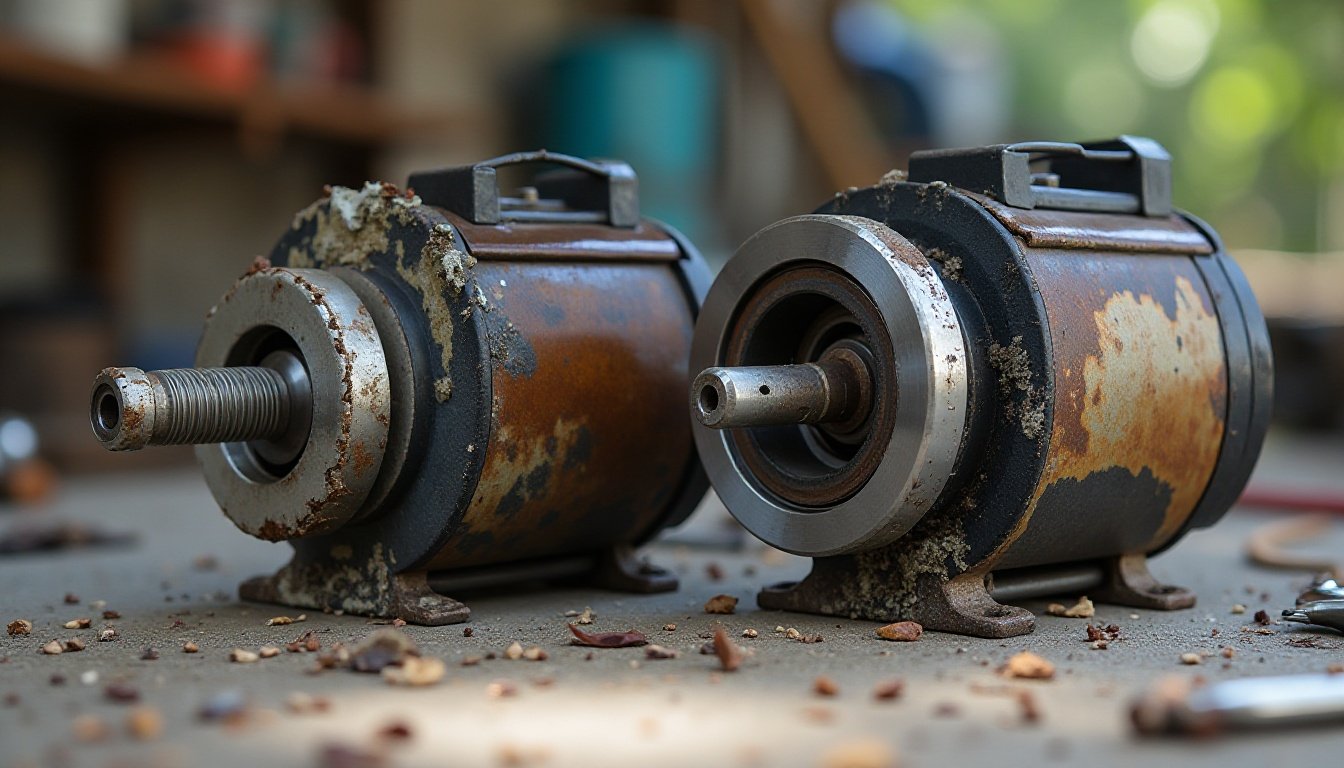
Worn motor bearings — the most common reason a pool pump gets loud. Replacing them early saves the motor.
What A good pool service fixes
Motor replacement
The motor is the part that fails. The pump body — the volute, the strainer housing, the plumbing connections — usually outlasts two or three motors. When the motor dies, a good pool service pulls it, match the frame, horsepower, and voltage to the original, and bolt the new one on. The pump body stays, the plumbing stays, and the pool is circulating again the same day. Pentair, Hayward and Jandy motors in common frame sizes are widely stocked.
Shaft seal and gasket leaks
Water dripping from behind the impeller housing usually means the shaft seal has failed. Left alone, that water reaches the motor windings and kills the motor. A seal replacement is a fraction of a motor replacement and stops the leak before it causes the bigger problem. A good pool service replaces the seal, the diffuser gasket, and the housing O-ring at the same time — if one is worn, the others are close behind.
Impeller clogs and erosion
Tucson's hard water deposits calcium inside the impeller over time, narrowing the passages and reducing flow. Debris — palo verde seeds, gravel, small rocks from desert landscaping — can jam the impeller and stall the motor. Clogs are usually cleared on site. If the impeller vanes are eroded to the point where the pump can no longer prime or hold pressure, a good pool service replaces the impeller rather than the whole pump.
Variable-speed upgrades
If your single-speed pump dies and the repair costs more than half of a new variable-speed unit, the upgrade usually makes more sense. A variable-speed pump runs at low RPM for daily circulation and ramps up only when it needs to — vacuuming, running a spa, backwashing. That cuts electricity by 60 to 80 percent. In Tucson, where pools circulate nine months a year or more, that savings adds up to $40 to $80 a month on a typical APS or TEP bill. The Department of Energy's 2021 rule also requires variable-speed on new pool construction and certain replacements in Arizona, so you may need one regardless.
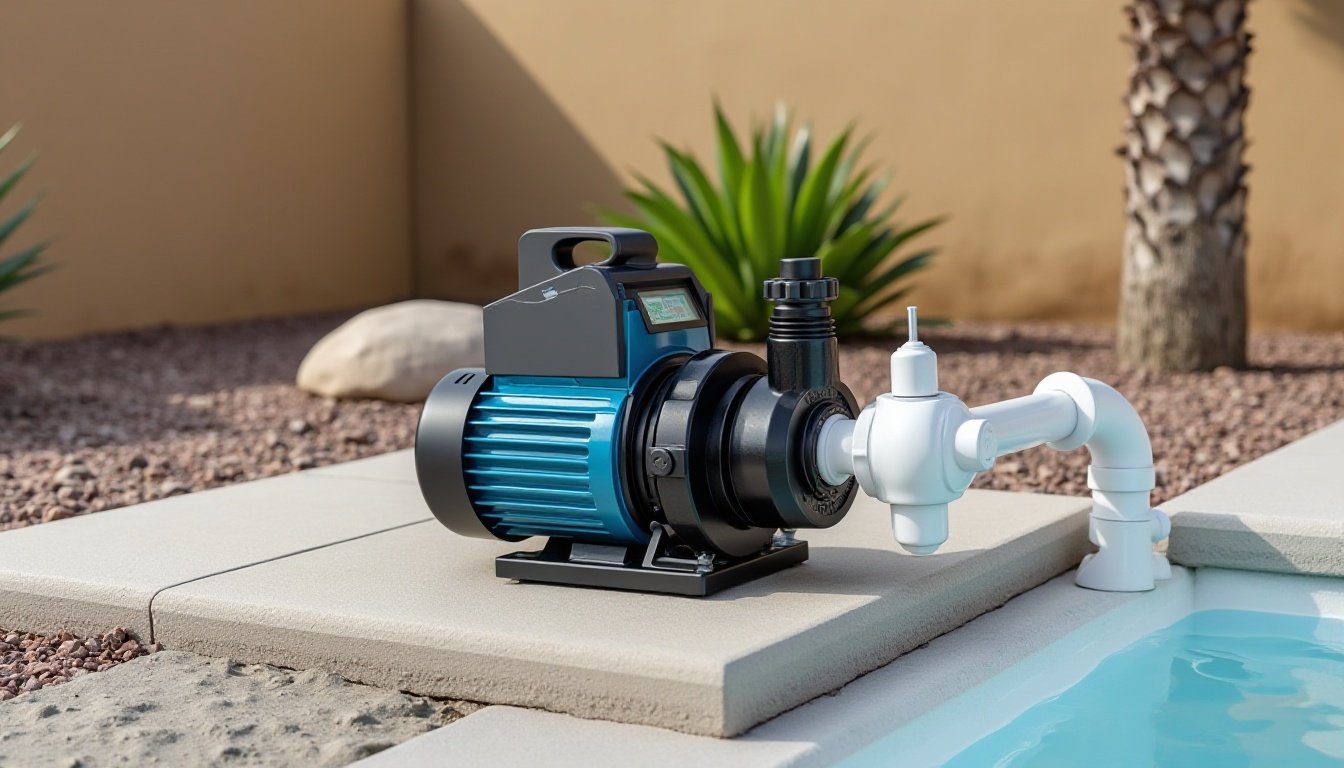
A variable-speed pump installed on a Tucson pool — quieter, more efficient, and built to handle the long Arizona pool season.
Why Pumps Wear Out Faster Here
Manufacturers rate a pool pump motor for eight to ten years. In Tucson, five to seven is more realistic, and there are three reasons.
First, the water. At 220 ppm calcium hardness, mineral deposits build inside the volute and on the impeller, making the motor work harder to move the same volume. Second, the heat. Ambient temperatures above 110 degrees raise the operating temperature of the motor, and heat is what kills windings and bearings. Third, run time. Tucson pools circulate far more hours per year than pools in seasonal climates, which puts more total wear on every moving part.
None of that means your pump is disposable — it means catching a noisy bearing at five years is the difference between a $300 motor swap and a $1,500 replacement at six.
Tucson, Oro Valley, Marana, Sahuarita, and Vail
A good pool service repairs pool pumps across Pima County. Call with the symptom — the noise it makes, whether it trips the breaker, whether it moves water — and a good pool service will tell you what it likely is before a good pool service comes out. Diagnosis is on site, and you get a price before any work starts.
Pump Repair Questions
Should I repair my pool pump or replace it?
If the motor is the only problem and the pump body is in good shape, a motor swap is usually half the cost of a full replacement and gets you several more years. If the motor repair costs more than half of a new variable-speed pump, replacing makes more sense — the energy savings on a variable-speed unit pay back the difference within a year or two in Tucson's long pool season.
Why is my pool pump making a loud humming or screeching noise?
A humming noise without the motor spinning usually means a seized bearing or a stuck capacitor. A screeching or grinding noise while running means the bearings are worn and failing. Either way, the motor needs attention soon — running it until it locks up can damage the pump housing and turn a motor job into a full pump replacement.
How long does a pool pump last in Tucson?
A single-speed pump motor typically lasts five to seven years in Tucson. Manufacturers rate them for eight to ten, but the hard water, extreme heat, and UV exposure here shorten that. Variable-speed motors tend to last longer because they run at lower speeds most of the time, which generates less heat and less bearing wear.
How much does a pool pump replacement cost?
A motor-only swap on a single-speed pump runs $250 to $500 installed. A full single-speed pump replacement is $450 to $800. A variable-speed pump replacement is $1,200 to $1,800 installed, but it cuts energy costs by 60 to 80 percent — most Tucson pool owners recover the difference within two seasons.
What is a variable-speed pump and is it worth it?
A variable-speed pump runs at different speeds depending on the task — low speed for daily circulation, high speed for vacuuming or running a spa. Because it runs on low most of the time, it uses 60 to 80 percent less electricity than a single-speed pump. In Tucson, where pools run nine months or more, the monthly savings are significant. Arizona also requires variable-speed pumps on new pool construction and certain replacement scenarios under the Department of Energy's 2021 rule.
Pump Not Running Right?
Call and describe the noise or the symptom. A good pool service will tell you what it likely is, come diagnose on site, and give you a price before touching anything.