Pool Cleaning & Maintenance in Tucson
Weekly service that keeps your pool swimmable year round — skimming, brushing, vacuuming, chemistry, and equipment checks. Ask what the monthly price includes.
Call (520) 372-1083
Weekly service that keeps your pool swimmable year round — skimming, brushing, vacuuming, chemistry, and equipment checks. Ask what the monthly price includes.
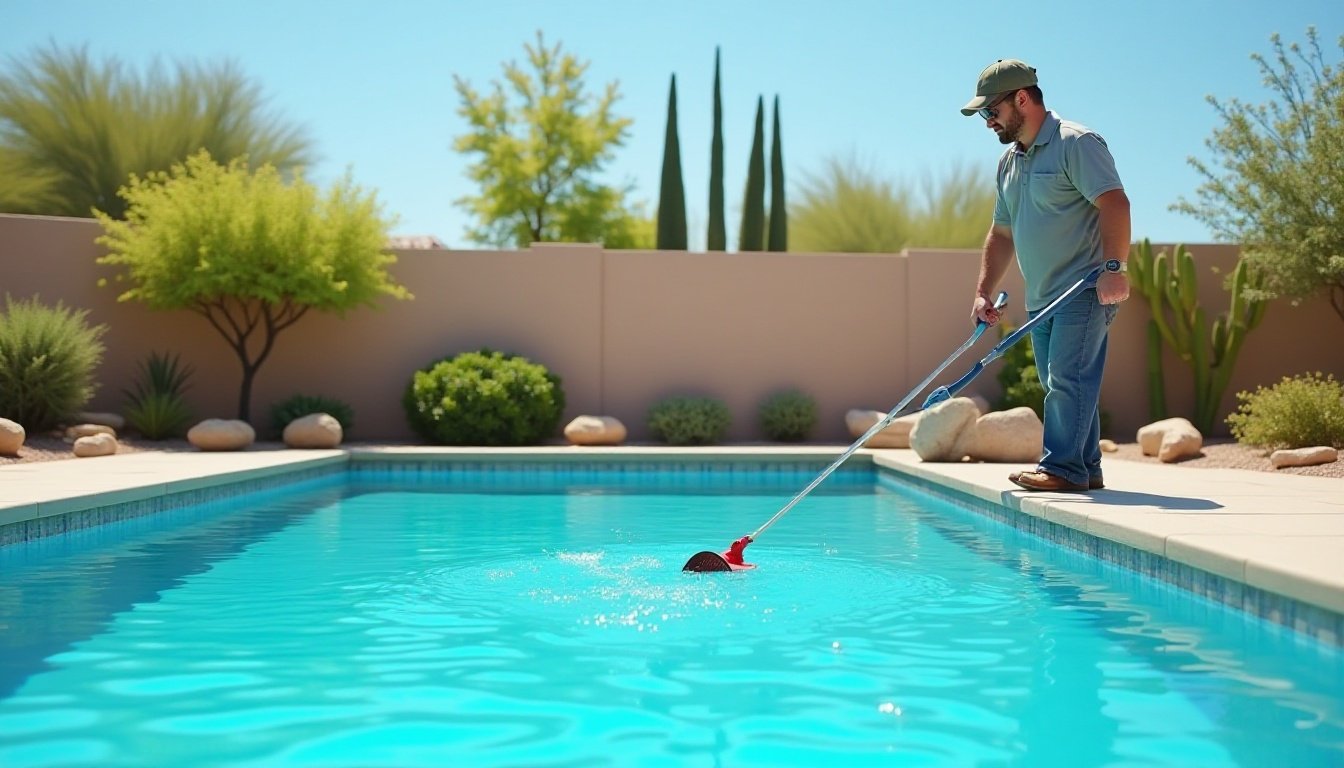
Call (520) 372-1083Every visit follows the same routine, in the same order, so nothing gets skipped. The technician skims the surface, empties the skimmer basket and the pump basket, brushes the walls, steps, and waterline tile, and vacuums the floor. Then he tests the water — chlorine, pH, alkalinity, cyanuric acid, and calcium hardness — and adjusts whatever needs adjusting. He checks the filter pressure gauge, inspects the pump and any other visible equipment, and logs what he found and what he dosed. You get a clean pool and a record of what went into it.
The whole visit takes 20 to 40 minutes depending on the pool's size and condition. If something is wrong — a noisy pump bearing, a filter running high, a crack in the skimmer throat — you hear about it the same day, not after it has turned into a bigger problem.

A pool in Portland or Chicago can go two weeks between cleanings and stay reasonable. A pool in Tucson cannot, and the reason is the climate working against you on three fronts at once.
Tucson averages over 300 days of direct sunlight a year. Ultraviolet light breaks down free chlorine — the chlorine that is actually killing bacteria — faster than almost any other factor. Without enough cyanuric acid to shield it, chlorine dosed on Monday can be gone by Wednesday. Weekly testing catches the drop before the pool turns.
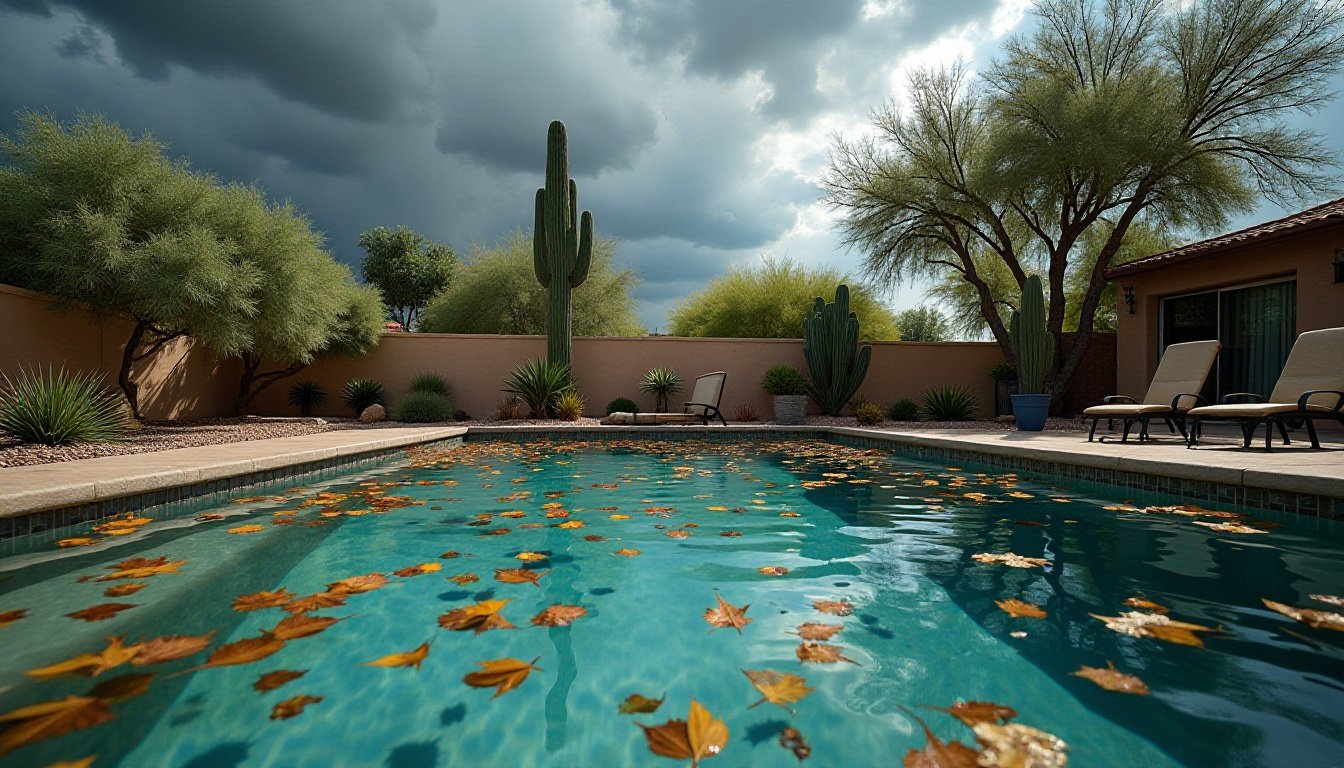
Desert dust is constant, and monsoon storms from mid-June through the end of September make it worse. A single haboob can deposit enough fine particulate to cloud a pool overnight and load the filter in one pass. Weekly brushing and vacuuming keep that dust off the plaster before it stains, and weekly basket emptying keeps the skimmer flowing instead of choking.
Tucson tap water runs around 220 parts per million calcium hardness. As water evaporates — and it evaporates fast here — the calcium left behind concentrates. Without regular chemistry adjustments the saturation index drifts toward scaling, and calcium starts depositing on the tile line, inside the heater, and across the salt cell plates. Weekly testing is how you stay ahead of it instead of paying for tile cleaning and cell replacement more often than you should.
Mid-June to the end of September is a different season for pool maintenance. Storms hit fast, dump dust and organic debris, and raise humidity that feeds algae. Water temperature climbs past 90 degrees, and chlorine demand doubles.
During monsoon season a good pool service increases chemical dosing and spends more time on debris removal. If a storm hits between your regular visits and you wake up to green water or a pool full of leaves, ask whether an extra clean-up visit is included in your plan. On most service plans that extra visit is included — you should not have to pay twice because the weather was bad.
Chlorine tablets, liquid chlorine, muriatic acid, stabilizer, and anything else your pool needs on a routine basis are part of the monthly price. You see one number on your bill every month — no line items for a jug of acid or a bucket of tabs. The only exception is a large one-time treatment like a full algae cleanout or a CYA drain-and-refill, which is quoted separately before any work.
Salt pools still need weekly service. The salt cell generates chlorine, but it does not brush the walls, skim the surface, balance pH, or manage calcium. A good pool service inspects the cell each visit for scale buildup and cleans it when output drops — a scaled cell works harder, wears out faster, and costs over a thousand dollars to replace. If your salt pool needs a partial drain to lower calcium or CYA, remember that Pima County requires salt water to go to the sanitary sewer, not to landscape or a wash.
If your pool has been sitting — a rental property between tenants, a house you just bought, a pool that was winterized and never reopened — a good pool service does one-time deep cleans to bring it back. That includes a full debris removal, a filter teardown and cleaning, a chemistry overhaul, brushing and vacuuming until the water clears, and a written report of anything that needs repair. You can stay on weekly service after or not — the deep clean stands on its own.
Calls are taken from pools across Pima County — central Tucson, the Catalina Foothills, Oro Valley, Marana, Sahuarita, and Vail. Call with your address and pool size, and you will be put through to a local pool company that can quote a monthly price.
Every visit includes skimming the surface, brushing walls and the tile line, vacuuming the floor, emptying skimmer and pump baskets, testing and adjusting water chemistry (chlorine, pH, alkalinity, cyanuric acid, calcium hardness), checking filter pressure, and inspecting visible equipment. Chemicals are included in the monthly price.
Weekly is the standard for Tucson. Desert dust, UV that burns through chlorine, and hard water that shifts chemistry all happen faster here than in cooler climates. Biweekly can work for a lightly used pool outside of monsoon season, but weekly is more reliable and catches problems before they compound.
It depends on the company. Many pool services include routine chemicals such as chlorine, acid and stabilizer in the monthly price, while others bill them separately. Ask on the call and get the answer in writing. The only exception is a large one-time treatment like an algae cleanout or a full CYA drain-and-refill, which is quoted separately before any work.
Monsoon storms dump dust, leaves, and debris into the pool and can turn water green within 48 hours. During monsoon season — mid-June through the end of September — a good pool service adjusts chemical dosing upward and spends more time on cleanup visits. If a storm hits between visits and you wake up to a green pool, ask whether an extra clean-up visit is included in your plan.
Yes. Salt pools still need weekly brushing, chemistry testing, and equipment checks. A good service also inspects the salt cell for calcium scale and cleans it when output drops. The main difference with a salt pool in Pima County is draining: salt water must go to the sanitary sewer, not to landscape or a wash.
Call with your address and pool size. Ask for the monthly price in writing, and whether chemicals are included.
Call (520) 372-1083